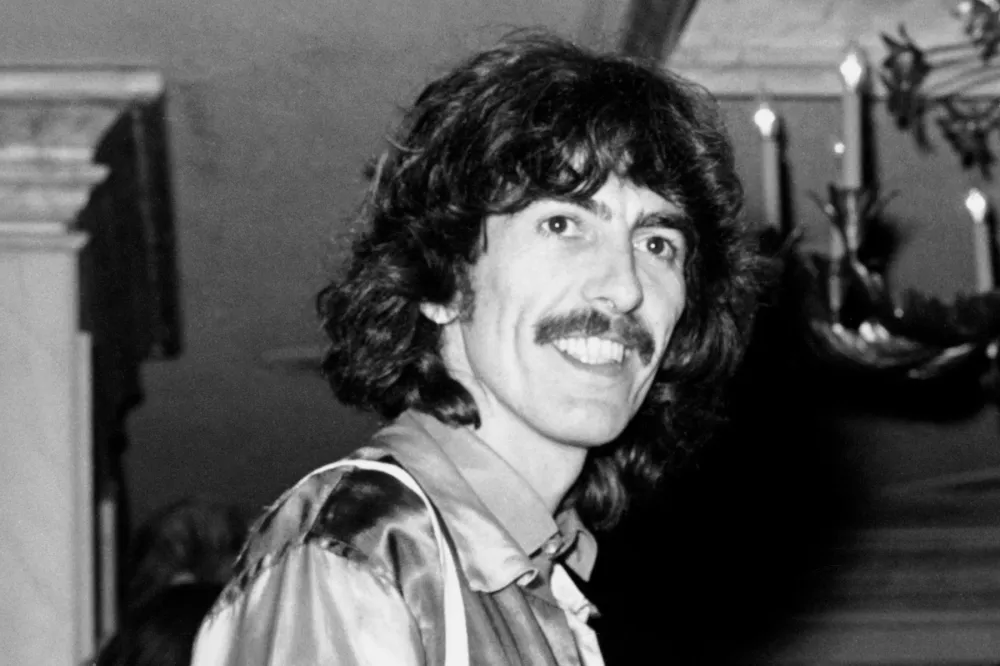
Legendary Beatles Member George Harrison's Spiritual Journey Sparked Cult Rumors in the 70s
Sponsored
The 1960s and 1970s were a tumultuous time. Not only did the Vietnam War and Civil Rights Movement force Americans to reckon with the country's questionable behavior at home and abroad, but huge cultural movements swept the nation. Perhaps the most impactful of these was the hippie movement, which touted culture-shifting ideals such as racial and gender equality, sexual liberation, communal living, and the use of psychedelics. The hippies also changed the face of American music, producing acts such as The Grateful Dead and The Allman Brothers, and they were known for their embrace of alternative spirituality, including Eastern religion and polytheism.
This religious and social exploration came with an unintended consequence: cults. Groups such as The Source Family, the Manson Family, and the Peoples Temple amassed tremendous followings at home and abroad, including a number of the most prominent musicians of the era. Fleetwood Mac’s Jeremy Spencer, for instance, joined the notoriously abusive Children of God. While he left his band for good—and was later replaced by the more well-known band lineup with Stevie Nicks, Christine McVie, and Lindsey Buckingham—other musicians continued to live their lives in the spotlight while aligning themselves with these controversial groups in private. The Beatles’ lead guitarist George Harrison is the most prominent example: He joined the Hare Krishna movement in the late 1960s and continued to be one of its most ardent supporters until his death in 2001.
Religious Scholars Remain Divided on Whether the Hare Krishna Movement Is a Cult
The Hare Krishna Movement, also known as the International Society for Krishna Consciousness (ISKCON), is an offshoot of the Gaudiya Vaishnava tradition founded in India over five hundred years ago. The Hindu texts it’s based on, such as the Bhagavad Gita, date back even further, to the first or second century BCE. That said, ISKCON itself was founded much more recently, in July 1966 in New York City by A. C. Bhaktivedanta Swami Prabhupada.The Hare Krishna movement is a pacifist one, preaching pantheistic Hinduism and mandating vegetarianism, a strict ethical code, and a specific set of devotional practices among its members. The group’s most well-known practice is its distinct chant, which followers often sang in parks and on city streets throughout the 1960s, ‘70s, and ‘80s while donning their orange robes and shaved heads. Over time, the movement amassed thousands of followers around the world, along with sprawling properties, boarding schools, and ashrams.
However, this growth was not without controversy. ISKCON has been accused of brainwashing practices, sexual assault of its members, and abuse within its schools. Former members have also said that the leaders maintain an unhealthy, high-control environment. ISKCON has even been challenged on a federal level, though the United States Supreme Court ruled in 1981 that it was a legitimate religion whose practices were protected under the First Amendment.
Comments